
The government on Monday abolished the Commodity Transaction Tax (CTT) that was announced in the Budget last year, but was yet to be implemented and the commodity exchanges rejoiced the decision.
On Sunday, exchanges and brokers got support against CTT from the apex commodities market regulator--the Forward Markets Commission. The regulator said that it would take up the demand for CTT withdrawal with finance minister Chidambaram.
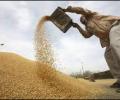
Despite lobbying by bourses, FinMin mulls tax to monitor the market.

The FM also said the government has proposed a joint panel of Corporate Affairs Ministry and CBDT for incorporation of income computation and disclosure standards.

ITC reported a 16.2 per cent year-on-year drop in consolidated net profit to 4,394.13 crore in Q1 FY27, primarily due to a significant increase in taxes on its cigarette business. Consolidated net revenues also declined by 11.1 per cent to 19,114 crore, missing analyst estimates.

Shares of brokerage-related companies nosedived 18 per cent on Sunday after Finance Minister Nirmala Sitharaman proposed raising securities transaction tax on commodity futures to 0.05 per cent from 0.02 per cent in the Union Budget 2026-27.

The government on Friday proposed hiking the securities transaction tax on Futures & Options (F&O) contracts, a move that will increase the trading costs in the derivatives segment as well as help in curbing excessive trades. In the Finance Bill 2023, passed by the Lok Sabha on Friday, the Securities Transaction Tax (STT) on options is proposed to be increased to 0.0625 per cent from 0.05 per cent and on futures contracts to 0.0125 from 0.01 per cent. Analysts opined that higher STT will shore up the government's revenues to some extent and also discourage excessive trading since a large number of retail traders are losing money in the segment.

A key demand is to reduce the dividend distribution tax on listed firms.
A higher transaction tax is likely to defeat the very purpose of commodity markets by forcing farmers and hedgers to exit due to greater cost, an ICRIER report said.

Finance Minister Nirmala Sitharaman on Tuesday said the securities transaction tax (STT) will be increased on futures and options (F&O) trade from October 1 to discourage retail investors from investing in the risky instrument.

Pitching for a slew of reforms in the Indian capital markets, leading bourse BSE has suggested the government bring in a new transaction taxation structure and besides seeking tax pass through status for Infrastructure Investment Trusts (InvITs).
The proposed commodity transaction tax of Rs 17 per lakh was part of the Union Budget 2008-09 that was approved by the Parliament in the last session and is yet to be notified. Asked about timeframe of notification, Pawar said, 'first you allow us to discuss and take a final view.'
In a memorandum to the Finance Minister, the exchanges said that FM's proposal to impose the Commodities Transaction Tax (CTT) will ruin the budding commodity futures business in India. In its arguments, it said CDM is at a nascent stage. It is only 4 years old. Participation of banks, mutual funds, FIs, FIIs is still not allowed. Options contracts, index futures & futures based on intangibles are still to come. Cost increase in India will induce hedgers to global exchanges.
The commodity transaction tax (CTT) proposal has started taking its toll on commodity exchanges. According to exchange officials, the turnover of commodity bourses has dropped sharply on transaction tax proposal and reports that the government may ban Futures trading of more commodities. The turnover may get eroded by another 20-30% once CTT comes into effect. CTT was unique and it has not been imposed on any Futures market anywhere in the world.

Reliance Industries Ltd reported a 22 per cent year-on-year decline in consolidated net profit for the June quarter, primarily because the previous year's earnings were inflated by a one-time gain from the sale of its stake in Asian Paints.

Leading stock exchange NSE on Tuesday reported a 94 per cent year-on-year surge in consolidated profit after tax to Rs 3,834 crore for three months ended December 2024. It posted a Profit After Tax (PAT) of Rs 1,975 crore in the year-ago period.
SST remains as a turnover tax (whether profit or loss) and not tax on income. Day traders and arbitrageurs, who generally trade on thin margins, are affected the most as STT raise their transaction cost. Any further hike in SST could prove negative and damper market sentiments. Removal or reduction in STT will pep up the stock market. Asset pricing is also likely to go up with reduction in transaction cost.
The removal of Commodities Transaction Tax (CTT) in the Budget 2009-10 may impact securities trade as investors may consider diverting focus to commodities market, SMC Capitals said in a report.

'When markets go into a budget with excessive optimism, the risk of disappointment is higher.'
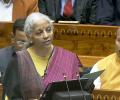
Budget 2026 sticks to fiscal discipline, shuns populist measures despite five key state elections coming up, but ends up rattling stock markets with a higher transaction tax on derivatives trading.

The market capitalisation of BSE-listed companies eroded by Rs 9,40,581.75 crore to Rs 4,50,61,658.60 crore (USD 4.90 trillion) in a single day.

'Once the market decides it wants to go up, it goes up -- no amount of bad news can really hold it back.'
In a chat on rediff.com, direct tax expert Vikas M Gandhi offered some valuable tax-saving tips.
Finance Minister Pranab Mukherjee has announced that Fringe Benefit Tax (FBT) has been abolished. The commodity transaction tax (CTT) has also been abolished. The Goods and Services Tax (GST) will come into effect from April 01, 2010, Mukherjee said.
Direct tax expert Vikas Gandhi offers some valuable tax-saving tips.
In an hour-long chat on Thursday, direct tax expert Vikas Gandhi offered some valuable tips.

GST Reform 2.0, which trims tax slabs from four to two, signals a push for demand-led growth, and together with recent income tax cuts, sets the stage for sustained economic growth, experts said. The Goods and Services Tax (GST) Council on September 3 approved an overhaul of the indirect tax regime by taxing essentials at 5 per cent and other goods at 18 per cent. A new 40 per cent tax will be applicable on luxury and sin items.

It will be the first to go, in what has become an overcrowded segment since India first allowed futures trading in commodities in 2003.
Finance Minister Pranab Mukherjee on Thursday tabled the Economic Survey for 2008-09 that prescribes doing away with cess, surcharges on taxes, including fringe benefit tax, and sweeping refroms in areas like petrol pricing and financial sector.
Recommending an end to all cesses and surcharges on taxes, and free pricing of fertiliser and fuel ahead of the Union Budget for 2009-10, the Economic Survey suggested on Thursday aggressive disinvestment and financial sector reforms to bring the economy back to high growth track.

The Committee, in an earlier report on the Direct Taxes Code (DTC) Bill, had favoured abolition of STT.
The Finance Minister Pranab Mukherjee on Monday tabled the Economic Survey for 2008-09 that prescribes doing away with cess, surcharges on taxes, including Fringe Benefit Tax, and sweeping refroms in areas like petrol pricing and financial sector.
The run in equities, coupled with high interest rates, makes both the debt and stock markets attractive.

The exchange, say sources, began mock trading from early October and around 250 Indian brokers have said they'd take membership of the international exchange.
Hope floats for higher trading volumes; warehousing and cold chain facilities get tax incentives.
With the introduction of CTT, commodity players raise their doubts about the fledgling futures market.
The commodities transaction tax is likely to come into force within the next two months as the details, including the collection, payment and the procedures for filing returns, will take some more time to be firmed up. The CTT, which will be administered by the Central Board of Direct Taxes, will be levied at the rate of 0.017 per cent on sellers of commodity futures as well as options. Purchasers of options, who exercise them, will pay 0.125 per cent
The uncertainty over the implementation of the new tax continues as the Finance Bill has not been passed by the Parliament. Finance minister P Chidambaram had announced in his Budget proposal that the levy would come into effect from April 1. The uncertainty over the implementation of the new tax continues as the Finance Bill has not been passed by the Parliament. P Chidambaram had announced in his Budget proposal that the levy would come into effect from April 1.

Amid the impending rejig in the goods and services tax (GST) rates, an association representing the country's beverages industry has appealed to the Centre to not classify aerated beverages as sin/demerit good and bring it under the 18 per cent slab while citing their "mass consumption" as a reason.
Finance Minister Arun Jaitley said Sebi would develop new products in the commodity derivatives space apart from taking steps to deepen the corporate bond market.
